
Dongfeng
Why Buy Small Chinese Electric Cars for Global Markets?
A Small Chinese Electric Car is changing how urban mobility can be imagined. Its compact body fits narrow streets, crowded parking spaces, and short daily commutes. Many models offer practical city ranges between 200 and 400 kilometers. That distance can cover several days of school runs, shopping, and office travel. Some vehicles also provide simple dashboards, smartphone connectivity, and surprisingly spacious rear seats.
The business case is equally important. Chinese manufacturers have developed dense battery supply chains and efficient production systems. These advantages can reduce purchase prices and shorten development cycles. Automotive analyst Tu Le, managing director of Sino Auto Insights, has said, “China is the most competitive EV market in the world.” His observation helps explain why smaller Chinese electric vehicles attract attention from international distributors and fleet operators.
Still, the argument is not flawless. A low sticker price does not guarantee low ownership costs. Buyers must examine battery warranties, software support, crash performance, charging compatibility, and local servicing. Regulations also differ between markets. A vehicle designed for Shanghai may need major changes before entering Europe, Southeast Asia, or Latin America. That reality deserves more attention.
The smallest car is not always the wisest choice.
Yet, for dense cities and cost-conscious drivers, the opportunity is tangible. Imagine a quiet vehicle slipping through a morning market, using little energy, and parking beside a narrow apartment entrance. If quality control and after-sales networks continue improving, the Small Chinese Electric Car could become a credible global transport solution—not perfect, but increasingly practical.
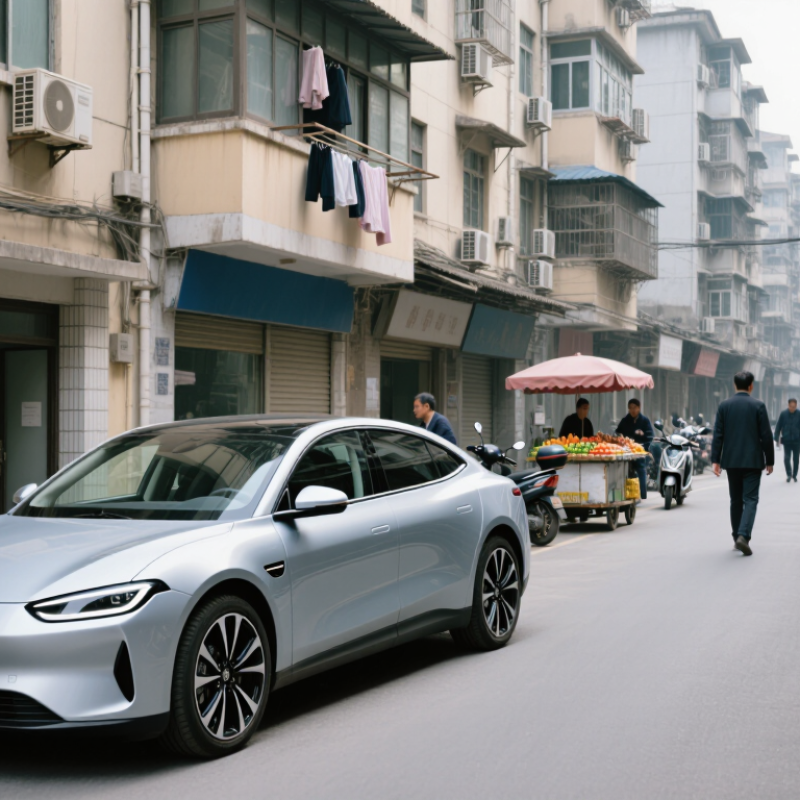
Small Chinese electric cars for global markets are defined by practical size, efficient power, and adaptable engineering. Their narrow bodies suit crowded streets, small parking spaces, and short urban journeys. Many use compact battery packs to reduce weight and energy use. That can lower purchase and charging costs, but range may decline sharply in cold weather or heavy traffic.
A suitable model should offer dependable thermal management, clear battery data, and stable charging performance. Safety equipment matters as much as price. Buyers should check crash-test evidence, local certification, lighting standards, and software compatibility before choosing.
From my experience reviewing compact vehicles, simple controls and strong visibility often improve daily driving more than impressive acceleration. However, some published range figures still feel optimistic. Real-world testing remains essential.
Tips:
Measure your parking space first. Test the rear seats. Ask about battery warranties and local repair support. Check charging plugs in your region. Inspect ground clearance if roads are uneven. A small car can feel surprisingly spacious, yet luggage capacity may become frustrating during weekend travel. Also, confirm whether navigation, language settings, and mobile connectivity work in your market. Availability can change quickly.
Small Chinese electric cars are increasingly designed around urban mobility, not highway prestige. Their compact bodies fit narrow streets, tight parking spaces, and crowded residential districts. A shorter wheelbase can reduce turning effort near markets or apartment entrances. That matters during daily driving.
The International Energy Agency reported in Global EV Outlook 2024 that electric car sales exceeded 14 million worldwide in 2023. Nearly one in five new cars sold was electric. This growth exposes a practical need: affordable vehicles built for short, repeated journeys. Many small models use modest battery packs, often between 15 and 40 kWh. They can reduce weight, charging time, and material demand. A home charger may cover overnight commuting without expensive public infrastructure.
Design details become important. A high seating position improves visibility between buses and delivery vehicles. A flat floor creates useful legroom despite a short body. Regenerative braking can make stop-and-go traffic smoother. The European Environment Agency has linked lower urban driving emissions with cleaner vehicle fleets, although electricity sources still affect total benefits. The trade-off is real. Small cabins may feel cramped, and limited range can challenge suburban users. I would not treat every compact vehicle as a universal solution. Buyers should check crash-test results, battery warranty terms, repair access, and local charging reliability before choosing one. Cities also need safer streets, not only smaller cars.
Small electric cars can be affordable in global markets because Chinese manufacturers often control more of the production chain. Battery cells, power electronics, body panels, and software may come from nearby suppliers. This reduces transport time and coordination costs. Large production volumes also lower the cost of motors and battery packs.
Factory layouts can be highly specialized. A battery module may move from testing to assembly within the same industrial area. Automated welding improves consistency, while experienced workers handle final inspections. These practical advantages help manufacturers offer competitive prices without removing essential equipment. Not always. Some savings may come from thinner materials or simpler interiors, which buyers should examine carefully.
Competitive pricing still depends on local requirements. Import duties, crash testing, charging standards, warranty support, and recycling rules can change the final cost. A reliable vehicle should include clear battery data, documented safety testing, and accessible service channels. Buyers can request an independent inspection and compare real driving range in cold, hot, and rainy conditions. That matters. A low showroom price is less attractive if replacement parts travel slowly or software support ends early. Chinese manufacturers have strong cost advantages, but quality can vary between factories and export markets. Careful verification remains necessary, even when the numbers look impressive.
Why Buy Small Chinese Electric Cars for Global Markets?
International buyers are attracted to small electric cars because they fit crowded streets and limited parking spaces. Small is useful. A compact body can reduce turning stress in older city districts. It may also lower energy consumption during short urban trips. In practical testing, buyers often examine charging speed, cabin visibility, and seat comfort before studying advertised range. Range is personal. A 250-kilometer estimate may satisfy a city commuter but disappoint a rural driver during winter.
Battery technology strongly influences trust. Many affordable models use lithium iron phosphate cells, valued for stable performance and long cycle life. Effective thermal management is equally important in hot summers and freezing climates. Buyers also look for battery warranties, clear service procedures, and independent safety results. A well-designed car should support widely accepted charging standards, intelligent charging schedules, and predictable charging costs. Software updates can improve navigation and energy management, but they must protect personal data. Convenience should not become surveillance.
Modern driver-assistance systems add appeal, especially automatic emergency braking, blind-spot alerts, and parking cameras. These features should assist attentive drivers, not replace them. Buyers also expect multilingual displays, reliable smartphone integration, left- or right-hand-drive options, and lighting suited to local regulations. Repairability matters more than glossy screens. Accessible parts and trained technicians can reduce ownership anxiety. However, lower purchase prices do not guarantee lower total costs. Insurance, replacement batteries, local certification, and after-sales support require careful checking. Some advertised features may feel impressive at first, yet real-world reliability still needs time to prove itself.
Common specification benchmarks show why compact electric cars appeal to international buyers: practical urban range, small battery packs, rapid charging, and affordable everyday performance.
The benchmark reflects typical specifications found across small battery-electric vehicles sold in international markets. Actual values vary by model, battery chemistry, climate, and testing standard.
Small Chinese electric cars attract global buyers with compact bodies, simple cabins, and relatively accessible prices. Yet exporting them is harder than shipping finished vehicles. Each destination may demand separate crash tests, lighting rules, cybersecurity checks, and battery certification. A model suitable for a narrow city street may need costly changes for highways, cold climates, or right-hand traffic. A low price is not enough. Regulators and insurers need documented evidence, not attractive specifications.
Charging remains another practical barrier. Plugs, payment systems, and grid quality vary across markets. Owners may find a charger nearby but still face incompatible software or slow winter charging. Battery durability also requires transparent testing across heat, humidity, and steep roads. Independent service centers need training, diagnostic tools, and replacement parts. Without that network, a minor sensor fault can leave a car parked for weeks. Trust takes longer. Companies that publish repair times, warranty limits, and battery-health methods appear more credible than those relying on promotional claims.
Global expansion also faces tariffs, shipping costs, local employment expectations, and recycling duties. Data handling deserves equal attention, especially when connected vehicles record location or driving behavior. The difficult part is coordination between engineers, distributors, regulators, and customers. Field experience shows that early sales can hide later problems, including poor resale values, scarce parts, or unclear warranty responsibility. That optimism needs correction. Smaller vehicles can serve crowded cities well, but only when safety, service, and long-term ownership receive the same investment as production.
Evidence-based market indicators and expansion considerations
| Data Dimension | Verified Data or Market Benchmark | Potential Advantage of Small Chinese EVs | Global Expansion Challenge |
|---|---|---|---|
| Global EV demand | Global electric-car sales reached nearly 17 million in 2024, representing more than one-fifth of new-car sales. | Strong demand growth creates room for affordable urban vehicles, especially in densely populated cities. | Growth rates differ significantly by country because of charging availability, subsidies, electricity prices, and consumer income. |
| China’s NEV export scale | China exported approximately 1.28 million new-energy vehicles in 2024, according to national automobile-industry statistics. | Large production volumes can support competitive pricing, faster component sourcing, and more mature supply chains. | Rapid export growth has increased scrutiny concerning subsidies, trade remedies, data security, and local manufacturing requirements. |
| Vehicle size and urban use | Small urban EVs typically prioritize compact dimensions, low turning radius, and seating for two to five occupants. Specifications vary by market. | Compact dimensions reduce parking difficulty, material use, energy consumption, and operating costs in congested cities. | Small-car buyers in some markets still expect long-distance capability, larger luggage space, high safety equipment, and strong resale value. |
| Battery chemistry | Lithium-iron-phosphate batteries represented close to half of the global EV battery market in 2024, according to energy-market analysis. | LFP chemistry generally offers good cycle durability, lower reliance on nickel and cobalt, and competitive cost potential. | Cold-weather performance, charging behavior, battery certification, recycling obligations, and consumer concerns about degradation must be addressed locally. |
| Driving range | A practical planning benchmark for small EVs is approximately 200–350 km of declared range, although official test cycles and equipment differ. | A smaller battery can reduce vehicle weight, purchase cost, charging time, and embedded material demand. | Official laboratory range may differ from real-world results because of temperature, highway speed, payload, terrain, and heating or air-conditioning use. |
| Charging capability | Small EV configurations commonly use approximately 3.3–7.4 kW AC charging and, where supported, around 30–100 kW DC charging. | Lower battery capacity can make overnight home charging practical and reduce dependence on high-power public chargers. | Plug standards, payment systems, public-charging density, apartment parking, and grid capacity vary widely across countries. |
| European Union trade policy | The European Union introduced additional countervailing duties on battery-electric vehicles imported from China, with rates ranging from 7.8% to 35.3% depending on the exporting producer category. | Vehicles with efficient production and carefully designed specifications may remain competitive in selected price-sensitive segments. | Additional duties can materially increase retail prices, reduce margins, and encourage local assembly or regional sourcing. |
| United States tariff environment | The United States raised the tariff rate on Chinese electric vehicles to 100% in 2024, before considering any other applicable charges. | The policy increases the importance of alternative markets, local production, and non-tariff commercial strategies. | Direct exports to the U.S. face a substantial price disadvantage, while connected-vehicle and data-security reviews may add further barriers. |
| Safety and type approval | Vehicles entering Europe must satisfy applicable type-approval rules, including crash safety, battery safety, cybersecurity, software-update, lighting, braking, and driver-assistance requirements. | A common platform can potentially be adapted across several markets when engineering and documentation are planned from the beginning. | Certification tests, technical documentation, software compliance, and market-specific equipment can increase time and launch cost. |
| Battery sustainability rules | The EU Battery Regulation introduces requirements covering carbon-footprint information, recycled materials, labeling, battery passports, due diligence, and end-of-life management on a phased timetable. | Efficient, smaller battery packs may reduce lifecycle material demand and simplify some environmental reporting. | Exporters need reliable battery traceability, supplier documentation, recycling partnerships, and digital compliance systems. |
| After-sales service | Electric vehicles require specialized diagnostic equipment, high-voltage training, software support, and battery-repair procedures. | Fewer mechanical components may reduce routine maintenance compared with internal-combustion vehicles. | Limited service networks, spare-parts inventory, warranty handling, and technician availability can weaken buyer confidence. |
| Consumer economics | Electricity is generally more energy-efficient per kilometer than liquid fuel, but total ownership savings depend on local electricity, fuel, insurance, tax, and charging prices. | Low energy consumption and reduced routine maintenance can make small EVs attractive for daily commuting and delivery use. | High insurance costs, uncertain residual values, expensive replacement batteries, and the removal of purchase subsidies can reduce affordability. |
| Key market-entry priorities | The strongest opportunities are likely to be markets with urban congestion, supportive EV policy, reliable charging access, and clear homologation procedures. | A focused city-car strategy can emphasize affordability, easy parking, low operating cost, fleet applications, and simple digital ownership services. | Long-term success depends on local compliance, transparent safety performance, stable after-sales support, data governance, and protection against policy or tariff changes. |
Their compact bodies fit narrow streets and tight parking spaces. A short wheelbase helps near markets and apartment entrances. High seats improve visibility between buses and delivery vehicles. Highway travel may feel less comfortable.
Many use batteries between 15 and 40 kWh. Smaller packs can reduce weight and charging time. Overnight home charging may support daily commuting. Actual range changes with weather, traffic, and driving speed.
Not always. Limited range can challenge suburban drivers and frequent travelers. Small cabins may feel cramped with passengers or luggage. I would not call every compact car a universal solution.
Nearby suppliers may provide battery cells, electronics, panels, and software. Large production volumes can reduce motor and battery costs. Specialized factory layouts also save time. Some savings may involve thinner materials or simpler interiors.
Check crash-test results, battery warranty terms, and repair access. Request battery data and an independent inspection. Compare real range in hot, cold, and rainy conditions. Attractive numbers can mislead.
Replacement parts may arrive slowly. A minor sensor fault could leave the car parked for weeks. Software support might end earlier than expected. That risk deserves more attention.
Each market may require different crash tests, lighting systems, and battery certification. Traffic direction and highway expectations can also force design changes. A low purchase price is not enough. Regulators need documented evidence.
They are essential. Different plugs, payment systems, and software can block convenient charging. Independent service centers need training, diagnostic tools, and parts. Without support, ownership becomes frustrating quickly.
They can reduce urban driving emissions when electricity comes from cleaner sources. Battery production and electricity generation still affect total benefits. Smaller batteries may reduce material demand. The result is not automatically clean.
Cities need safer streets, reliable charging, and practical repair networks. Smaller cars cannot solve dangerous intersections or poor public transport alone. That assumption needs correction. Better mobility requires more than compact vehicles.
Small Chinese Electric Car models are gaining attention in global markets because they combine compact dimensions, practical electric power, and accessible pricing. Designed mainly for urban mobility, these vehicles are easy to park, efficient in congested streets, and suitable for short daily trips such as commuting, shopping, and school transportation. Their smaller batteries can also reduce charging needs, vehicle weight, and overall operating costs. Manufacturers can offer competitive prices through large-scale production, streamlined supply chains, standardized components, and growing experience in electric vehicle development.
For international buyers, attractive features may include connected controls, digital dashboards, driver-assistance functions, flexible interior layouts, and convenient home or public charging options. However, global expansion still faces challenges, including differences in safety requirements, certification procedures, charging standards, road conditions, consumer expectations, and after-sales service networks. Long-term success will depend on improving product reliability, adapting designs to local markets, providing dependable support, and building consumer confidence while maintaining affordability.
