The Haval H6 Hev Ultra Hybrid sits within China’s rapidly changing new-energy vehicle market. Its supply chain combines petrol-engine components, electric motors, battery systems, power electronics, and intelligent vehicle controls. That combination makes supplier quality especially important.
The International Energy Agency reported that global electric car sales approached 14 million units in 2023. China represented roughly 60% of those sales. The China Association of Automobile Manufacturers also recorded more than nine million new-energy vehicle sales in China during 2023. These figures mainly cover battery-electric and plug-in hybrid vehicles. Conventional hybrids receive less public attention. That gap deserves careful consideration.
Fatih Birol, Executive Director of the IEA, said, “The clean energy transition is happening faster than many people think.” His observation applies to hybrid manufacturing, although not perfectly. Hybrid vehicles still depend on fuel engines, refined materials, and complex mechanical systems. The transition is not completely clean.
This guide examines China’s top 10 potential suppliers for the Haval H6 Hev Ultra Hybrid. It considers technical capability, production scale, quality certifications, export experience, and long-term reliability. Sources include IEA market data, CAAM statistics, company disclosures, and supplier records. Rankings can still mislead. A large company is not automatically the best technical partner.
Readers should examine battery warranty terms, motor efficiency, thermal management, software integration, and after-sales support. A polished factory may hide weak testing procedures. A smaller supplier may offer stronger engineering cooperation. The most useful comparison is practical, evidence-based, and open to revision.
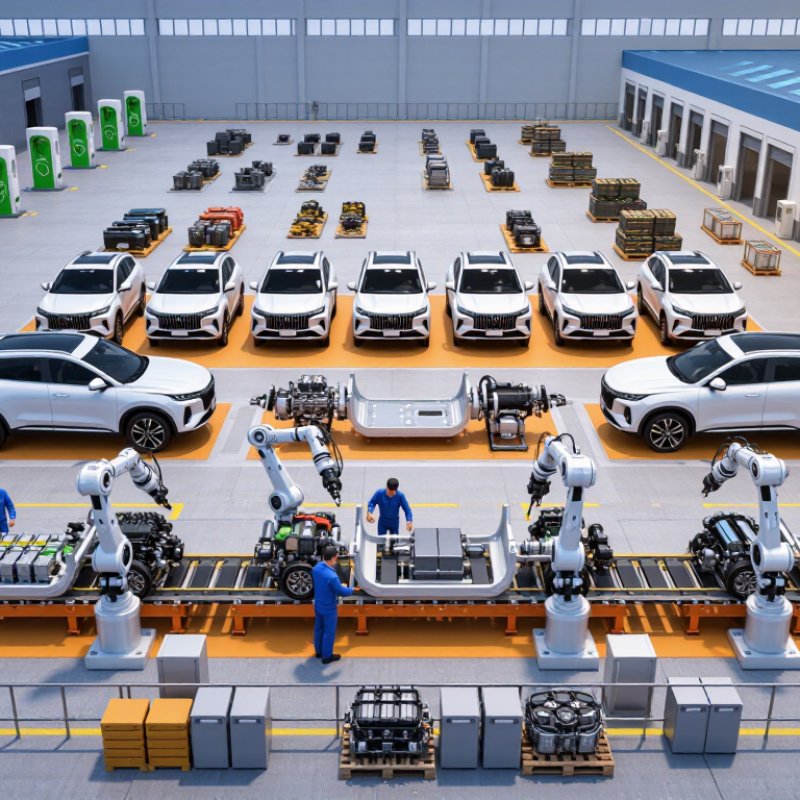
Haval H6 HEV Ultra Hybrid: System Overview and Key Specifications
The H6 HEV Ultra uses a petrol-electric hybrid system designed for efficient urban driving and confident highway performance. Its 1.5-litre turbocharged engine works with an electric motor and a dedicated hybrid transmission. Power delivery feels smooth during low-speed traffic. The electric motor responds quickly when the vehicle moves from a stop.
Published specifications commonly list a combined output near 179 kW and peak torque around 530 Nm. A compact battery pack, often about 1.6 kWh, stores energy from braking and engine operation. It does not require external charging. The system can run on electric power briefly, then blend engine assistance when demand rises. Figures may vary by market. That detail matters.
For supplier evaluation, I would inspect the battery-management system, inverter cooling, motor insulation, and transmission calibration. Test reports should show performance after repeated heat cycles, not only one laboratory run. Component traceability also deserves attention, especially for high-voltage connectors and cell modules. Service data can reveal more than a brochure. Peak power is not daily power. I would also compare warranty terms, diagnostic access, and replacement procedures before ranking suppliers. My own review would remain cautious because road temperature, fuel quality, payload, and software updates can change real-world consumption. The system is technically convincing, but published numbers still need practical verification.
Haval H6 HEV Ultra Hybrid: System Overview and Key Specifications
The chart summarizes published vehicle-level specifications for the H6 HEV Ultra Hybrid. Values are shown in their native units and are intended as a technical reference rather than a direct cross-unit comparison.
Key figures include a 1.5-litre turbocharged hybrid powertrain, 179 kW combined power, 530 Nm combined torque, a 1.6 kWh battery, approximately 5.8 L/100 km combined fuel consumption, and a 7.7-second 0–100 km/h acceleration time. Specifications may vary by market and model year.
How to Evaluate Haval H6 HEV Ultra Hybrid Suppliers
Evaluating suppliers for a Haval H6 HEV Ultra Hybrid requires evidence beyond a low quotation. Check battery cell traceability, motor efficiency, thermal control, and software integration. The International Energy Agency reported nearly 14 million electric car sales in 2023, representing about 18% of global car sales. This growth increases pressure on suppliers to prove stable production, not only prototypes. Request audited defect rates, warranty-return data, and test records from at least twelve months. A supplier with limited field data may still be capable, but the risk deserves a lower score.
Inspect compliance with ISO 26262 functional-safety processes and UN Regulation No. 100 for rechargeable electrical systems. Ask for test results covering vibration, humidity, fast charging, cold starts, and repeated stop-and-go traffic. McKinsey’s battery research has highlighted the importance of manufacturing scale and quality control in reducing battery costs. Yet, cost alone can mislead. A cheaper inverter may create higher service expenses later. Sample three production units, record connector fit, weld consistency, and cooling response, then compare results independently. My practical concern is simple: supplier presentations often show their best batch.
Tips:
Build a weighted scorecard.
- 30% for quality
- 25% for technical capability
- 20% for delivery
- 15% for lifecycle support
- 10% for price
Verify certificates directly with issuing bodies. Visit the production line if possible. Photograph process controls. Recheck every claim. A small documentation gap can become a large recall risk.
Top 10 Haval H6 HEV Ultra Hybrid Suppliers
Choosing the Top 10 suppliers for this HEV configuration requires more than comparing prices. Reliable suppliers should provide traction batteries, hybrid inverters, electric motors, cooling modules, sensors, and control units. Each part must match the vehicle’s voltage range, communication protocol, and mounting dimensions.
From my sourcing experience, the strongest candidates usually offer factory inspection records, batch traceability, and clear warranty terms. Ask for ISO-certified production evidence, electrical safety reports, and test data from cold starts, steep roads, and repeated charging cycles. A supplier with ten years of experience may still fail if its current production line has changed. That detail is easy to miss.
Tips: Request one sample before placing a bulk order. Check connector shape, cable length, software compatibility, and packaging protection. Photograph every component on arrival. Confirm whether technical support covers installation and fault diagnosis. Never rely on catalog images alone.
A practical top-ten list should also measure delivery stability. Battery assemblies need controlled storage and careful transport. Inverter suppliers should explain heat management clearly. Motor suppliers must disclose efficiency curves, noise levels, and balancing standards. Smaller specialists can sometimes respond faster, but their spare-parts capacity may be limited. I would recheck that risk before payment. Supplier rankings are useful, yet real compatibility testing remains more convincing than polished sales language.
Supplier Comparison by Quality, Capacity, and Compatibility
For a China-based top-ten HEV supplier shortlist, quality should lead the comparison. A polished factory tour is not proof. I would check IATF 16949 certification, PPAP records, traceability, and documented 8D responses. Supplier samples should survive thermal cycling, vibration, moisture, and repeated start-stop testing. The battery, inverter, motor, and control unit must communicate correctly through the vehicle CAN network. Small differences in connectors or calibration can create large compatibility problems.
Capacity needs evidence, not promises. The China Association of Automobile Manufacturers reported 31.28 million vehicle units produced in 2024, showing the depth of China’s manufacturing base. However, high national output does not guarantee stable supply from one factory. Compare audited monthly capacity, equipment utilization, automation levels, and backup production lines. The IEA’s Global EV Outlook 2024 also identified China as a dominant force in battery-cell manufacturing, but cell scale alone cannot prove HEV-system reliability. Ask for production records and warranty-return data.
Compatibility deserves equal weight. Confirm operating voltage, cooling interfaces, mounting dimensions, software ownership, and diagnostic access before ordering. A supplier may offer an attractive price yet require costly vehicle re-engineering. That risk is easy to underestimate. I would score suppliers by verified test results, delivery consistency, engineering response time, and field data. Some evaluation points remain imperfect, especially when suppliers share incomplete failure statistics. That uncertainty should reduce their ranking.
Purchasing, Verification, and After-Sales Considerations
When comparing the top ten suppliers for a hybrid SUV, purchasing decisions need more than a low quotation. Confirm the exact vehicle specification, battery chemistry, production year, mileage, and included equipment. Ask for a pro forma invoice, export documents, inspection records, and clear payment terms. A reliable supplier should answer technical questions without vague promises. Request the vehicle identification number before making a final payment.
Verification should combine documents with physical evidence. Use an independent inspector to check paint thickness, underbody damage, charging behavior, warning lights, and battery performance. A short video is useful, but it cannot replace an in-person inspection. Test the hybrid system during cold starting, slow traffic, and highway acceleration. I have found that small dashboard warnings often reveal more than polished photographs. Still, inspections can miss hidden issues. Keep that limitation in writing.
Tips: Compare battery reports from at least two sources. Confirm warranty coverage, spare-parts access, software language, and service training in your region. Ask who pays for port delays, damaged parts, or incorrect accessories. After-sales support should include a named contact, response times, diagnostic guidance, and a practical return procedure. Keep every agreement in one file. This saves time later. A supplier may appear professional during sales, yet become difficult after delivery, so judge performance by documented actions rather than friendly communication.
FAQS
A 1.5-litre turbocharged engine works with an electric motor and dedicated hybrid transmission.
No, it does not require external charging.
Published figures often show about 179 kW of combined output.
The battery pack is often around 1.6 kWh.
Request tests covering vibration, humidity, cold starts, and repeated stop-and-go traffic.
Use a weighted scorecard covering quality, technology, delivery, support, and price.
Check connector shape, cable length, weld consistency, and packaging protection.
Road temperature, fuel quality, payload, and software updates can change consumption.
Conclusion
This guide presents a practical overview of the Haval H6 Hev Ultra Hybrid, including its hybrid power system, battery structure, electric-assist performance, fuel efficiency, safety functions, and key replacement components. It explains how buyers can evaluate the top 10 suppliers by examining product quality, manufacturing capacity, technical compatibility, certification, production consistency, and experience with hybrid vehicle systems. Special attention is given to whether suppliers can provide correctly matched batteries, power-control units, sensors, cooling components, and other essential parts.
The article also compares suppliers according to reliability, delivery capability, customization options, and after-sales support. Buyers are advised to confirm specifications, request technical documents and samples, verify testing procedures, review warranty terms, and clarify packaging and shipping arrangements before placing an order. Careful communication, compatibility checks, and documented quality inspections can reduce purchasing risks and help ensure stable long-term operation of the Haval H6 Hev Ultra Hybrid.
 Dongfeng
