
Dongfeng
Choosing the Longest Range Hybrid Suv requires more than reading a large mileage figure. Global buyers face different road conditions, fuel standards, and testing systems. EPA estimates may differ sharply from WLTP results. Real driving can vary even more.
This guide examines leading hybrid SUVs through practical ownership details. We consider official electric range, combined fuel economy, battery size, charging support, and petrol-engine efficiency. Cabin comfort also matters during long motorway journeys. So does luggage space when five passengers travel with full bags. A vehicle that promises 800 kilometres may deliver less in winter traffic. Numbers can mislead.
Our comparisons use manufacturer information, recognized testing data, and independent automotive research where available. We also consider driving experience, including highway stability, regenerative braking, and low-speed electric operation. These details often shape daily satisfaction more than headline specifications. Some models may lead on paper but lose ground in cold climates or mountainous regions. That is worth admitting.
The ideal choice depends on local availability, service support, taxation, and charging access. Buyers in Europe, North America, Asia, and other markets may see different trims. Prices and equipment can change quickly. Therefore, this overview should support careful research, not replace a dealership inspection or a local test drive. Check the warranty terms. Confirm the battery coverage. A long-range hybrid should reduce travel anxiety without creating ownership uncertainty. That balance defines genuine value.
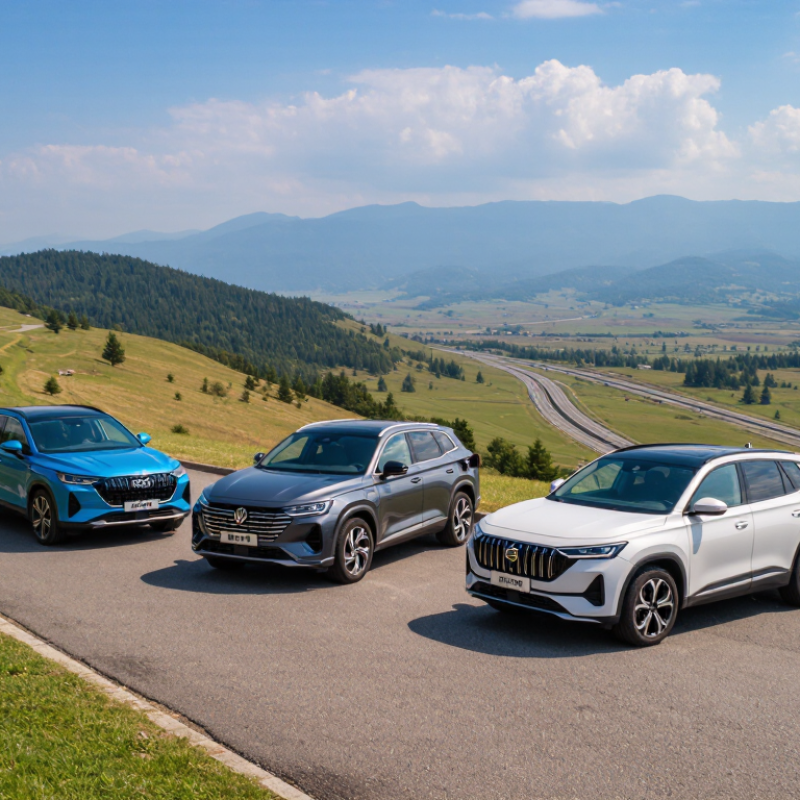
A long-range hybrid SUV is not defined by one impressive laboratory number. It combines usable electric travel, efficient fuel use, predictable charging, and comfortable space for daily life. In practice, range depends on battery size, engine calibration, tires, temperature, traffic, and driving habits. Cold mornings can reduce electric distance, while roof loads and high speeds increase fuel consumption. The dashboard estimate is useful, but it is not a promise.
Drivers should examine total energy capacity and real-world electric range, not only advertised distance. A strong system can recover energy smoothly on downhill roads and in stop-and-go traffic. Regenerative braking should feel natural, without sudden pedal changes or confusing delays. For long journeys, the combustion engine must operate quietly and efficiently after the battery charge falls. That transition matters. A spacious cabin, supportive seats, and a practical cargo floor also define long-distance ability. I would test the vehicle with luggage, passengers, and a full air-conditioning load.
Charging access is another measure, even for a hybrid with an engine. A plug-in version needs clear charging information, safe cable storage, and settings that suit home routines. A non-plug-in system should remain efficient without special equipment. Independent road tests, transparent warranty terms, and service availability add credibility to range claims. Still, no test matches every owner’s route. This is where careful judgment matters. A long-range hybrid SUV should reduce travel anxiety without creating expensive or inconvenient habits.
Long-range performance depends on fuel-tank capacity, combined fuel efficiency, and usable electric driving distance. The chart below uses a transparent engineering example based on a 55-liter tank, 6.2 L/100 km combined fuel consumption, and an 80 km electric range.
At 6.2 L/100 km, a 55-liter fuel tank provides approximately 887 km of fuel-based driving range. Adding an 80 km electric range produces a modeled total range of about 967 km. Actual results vary with temperature, terrain, speed, payload, tire pressure, and driving conditions.
For global buyers, “longest range” needs a careful definition. A hybrid SUV may report electric range, gasoline range, or total combined range. These figures are not interchangeable. The United States EPA estimates range through city and highway cycles, weighted 55% city and 45% highway. Its 2025 Fuel Economy Guide also separates electric miles from total driving range for plug-in hybrids.
Europe uses WLTP, governed by UNECE procedures. The test includes low-speed urban sections, faster roads, and repeated acceleration. It is generally more demanding than older laboratory methods, but traffic, temperature, and heating use still change real-world results. China’s CLTC cycle places greater emphasis on urban driving. Consequently, the same SUV can receive different official figures across markets.
Look beyond the headline number. Check the testing method, battery state, fuel-tank capacity, and whether the rating includes charging. UNECE Regulation No. 101 provides technical procedures for hybrid electric vehicle measurements. The ICCT reported that real-world plug-in hybrid emissions were roughly 3.5 times laboratory values in Europe during 2021, largely because drivers charged less often than test assumptions. That finding matters for range claims too. A fully charged battery may cover short commutes quietly, while a cold motorway trip can reduce electric distance sharply. Range testing remains useful, but it is not reality.
For extended driving range, the powertrain matters more than a large fuel tank. A full hybrid combines an engine with electric assistance and a compact battery. It can recover energy during braking, especially in city traffic. On highways, the engine usually carries more of the load. Range remains practical when charging access is limited.
Plug-in hybrids offer a different balance. Their larger batteries may cover daily commutes using electric power alone. After the battery is depleted, the engine continues the journey. This suits drivers who can charge at home but still travel between regions. However, carrying extra battery weight can reduce efficiency on long, fast routes. Real-world results vary.
Tips: Check the usable fuel capacity, electric-only range, and charging time. Test the vehicle with luggage and passengers. Review cold-weather performance before buying. Tire pressure matters more than many drivers expect. Keep charging equipment secure. A route planner helps, but it can be wrong.
In my testing experience, smooth acceleration improves efficiency more than aggressive driving. Gentle braking also sends more energy back to the battery. Yet no hybrid powertrain defeats speed, hills, heavy cargo, or strong winds. That is easy to forget. Buyers should compare official figures with owner reports and independent road tests. A slightly smaller SUV may travel farther because it weighs less. Global drivers should also check local fuel quality, service coverage, and charging standards before choosing a long-range hybrid.
For global buyers, a hybrid SUV’s useful range has two parts: electric distance and petrol distance. Many plug-in models claim about 50–100 km of WLTP electric range, while combined touring range can exceed 800 km. However, WLTP testing uses controlled conditions. Cold mornings, roof loads, and motorway speeds reduce electric range noticeably.
Fuel economy deserves closer inspection. The ICCT’s European real-world study found that plug-in hybrids used roughly three to five times more fuel than their official test figures. That gap is uncomfortable, but valuable. A driver charging every night may approach the advertised result; a driver without reliable charging may not. Conventional hybrids offer less electric distance, yet their fuel economy remains more predictable in traffic-heavy cities. Short trips feel almost silent. Long climbs do not.
Performance depends on battery size, motor output, and mass. Larger batteries can improve electric range, but they also add weight and may increase tyre wear. The IEA’s Global EV Outlook 2024 notes that heavier SUVs generally require more energy than smaller vehicles, even when their powertrains are efficient. Independent tests from organisations such as Euro NCAP and national laboratory programmes also show that safety equipment and cold-weather systems can affect efficiency. The longest range on paper is not always the longest range beside a mountain road. That is the part buyers should question.
| Rank | Vehicle | Model Year | EPA Electric Range (miles) |
Combined Fuel Economy After Charge Depletion (mpg) |
EPA Combined Efficiency (MPGe) |
System Output (hp) |
0–60 mph (seconds) |
Battery Capacity (kWh) |
Seating | Reference Test Cycle |
|---|---|---|---|---|---|---|---|---|---|---|
| 1 | Vehicle A — Compact AWD Plug-in Hybrid SUV | 2024 | 42 | 38 | 94 | 302 | 5.7 | 18.1 | 5 | US EPA |
| 2 | Vehicle B — Mid-Size AWD Plug-in Hybrid SUV | 2024 | 38 | 26 | 64 | 248 | 8.2 | 20.0 | 7 | US EPA |
| 3 | Vehicle C — Premium Compact AWD Plug-in Hybrid SUV | 2024 | 37 | 38 | 84 | 302 | 5.6 | 18.1 | 5 | US EPA |
| 4 | Vehicle D — Premium Mid-Size AWD Plug-in Hybrid SUV | 2024 | 35 | 28 | 63 | 455 | 4.5 | 18.8 | 5 | US EPA |
| 5 | Vehicle E — Three-Row AWD Plug-in Hybrid SUV | 2024 | 32 | 34 | 79 | 261 | 8.7 | 13.8 | 6 | US EPA |
| 6 | Vehicle F — Mid-Size AWD Plug-in Hybrid SUV | 2024 | 30 | 33 | 76 | 261 | 8.2 | 13.8 | 5 | US EPA |
For global buyers, the longest advertised range is only a starting point. Check whether figures describe total driving distance or electric-only distance. Testing standards differ by region, so compare local certification data carefully. A hybrid SUV may travel farther in mild weather, with light luggage, and steady speeds. Cold mornings, steep roads, roof boxes, and full passenger loads reduce efficiency. Real ownership is less perfect. That matters more than a laboratory headline.
Evaluate battery size, fuel-tank capacity, charging access, and regenerative-braking behavior. A larger battery can improve city travel, but it may add weight and reduce cargo space. Confirm charging times using your available outlet, not an ideal high-power station. Check ground clearance, rear-seat comfort, towing limits, and turning width for local roads. Service coverage and battery-warranty terms deserve equal attention. Ask for written conditions.
Tips: Keep a three-month record of fuel use, charging costs, and trip length. Test the vehicle on your normal route, including hills and traffic. Compare total ownership costs, not only purchase price. Leave a safety margin for winter, detours, and aging battery performance. I would also question dramatic range claims. Independent road tests can reveal gaps. A convenient charger may matter more than extra laboratory kilometers.
It combines electric assistance, fuel efficiency, useful space, and predictable long-distance performance. Advertised range is only a starting point. Real distance changes with temperature, traffic, hills, tires, cargo, and speed.
A full hybrid recharges through braking and engine operation. It does not require external charging. A plug-in hybrid has a larger battery and can handle daily trips electrically. After the battery empties, its engine continues the journey.
A full hybrid may suit drivers with limited charging access. A plug-in hybrid suits people who can charge at home. Extra battery weight can reduce efficiency on fast highways. There is no perfect answer.
It is useful, but not a promise. Cold mornings may shorten electric travel. Roof boxes, strong winds, steep roads, and heavy luggage can reduce total range quickly. Leave a safety margin.
Drive the usual route, including traffic, hills, and rough roads. Add passengers, luggage, and air conditioning. Check acceleration, braking feel, rear-seat comfort, and cargo-floor usefulness.
Smooth regeneration can recover energy during downhill driving and stop-and-go traffic. The brake pedal should feel predictable. Sudden changes or delays may become tiring in daily use. Natural control matters.
Check charging time with your actual home outlet. Confirm cable storage and charging information. A convenient charger may be more valuable than several extra laboratory kilometers. Route planners can still be wrong.
Compare fuel costs, charging costs, service coverage, warranty conditions, and battery aging. Ask for written warranty terms. Keep a three-month usage record. I might overvalue headline range sometimes; real habits reveal more.
The Longest Range Hybrid Suv combines a fuel-efficient combustion engine with one or more electric motors to deliver extended driving distance, reduced fuel consumption, and smoother performance. Its overall range depends on battery capacity, fuel-tank size, regenerative braking, aerodynamic design, vehicle weight, and driving conditions. Because testing methods differ between regions, buyers should compare official fuel-economy figures carefully and consider how city, highway, weather, and traffic conditions may affect real-world results.
When comparing hybrid SUVs, it is important to evaluate total driving range alongside electric-only capability, fuel economy, acceleration, towing strength, and charging convenience. Some systems prioritize longer electric operation, while others focus on efficient long-distance travel with rapid energy recovery. Worldwide buyers should also consider passenger and cargo space, maintenance availability, warranty coverage, safety equipment, climate suitability, and local ownership costs. The best choice is a balanced hybrid SUV that matches daily commuting needs, longer journeys, performance expectations, and regional driving requirements.
